
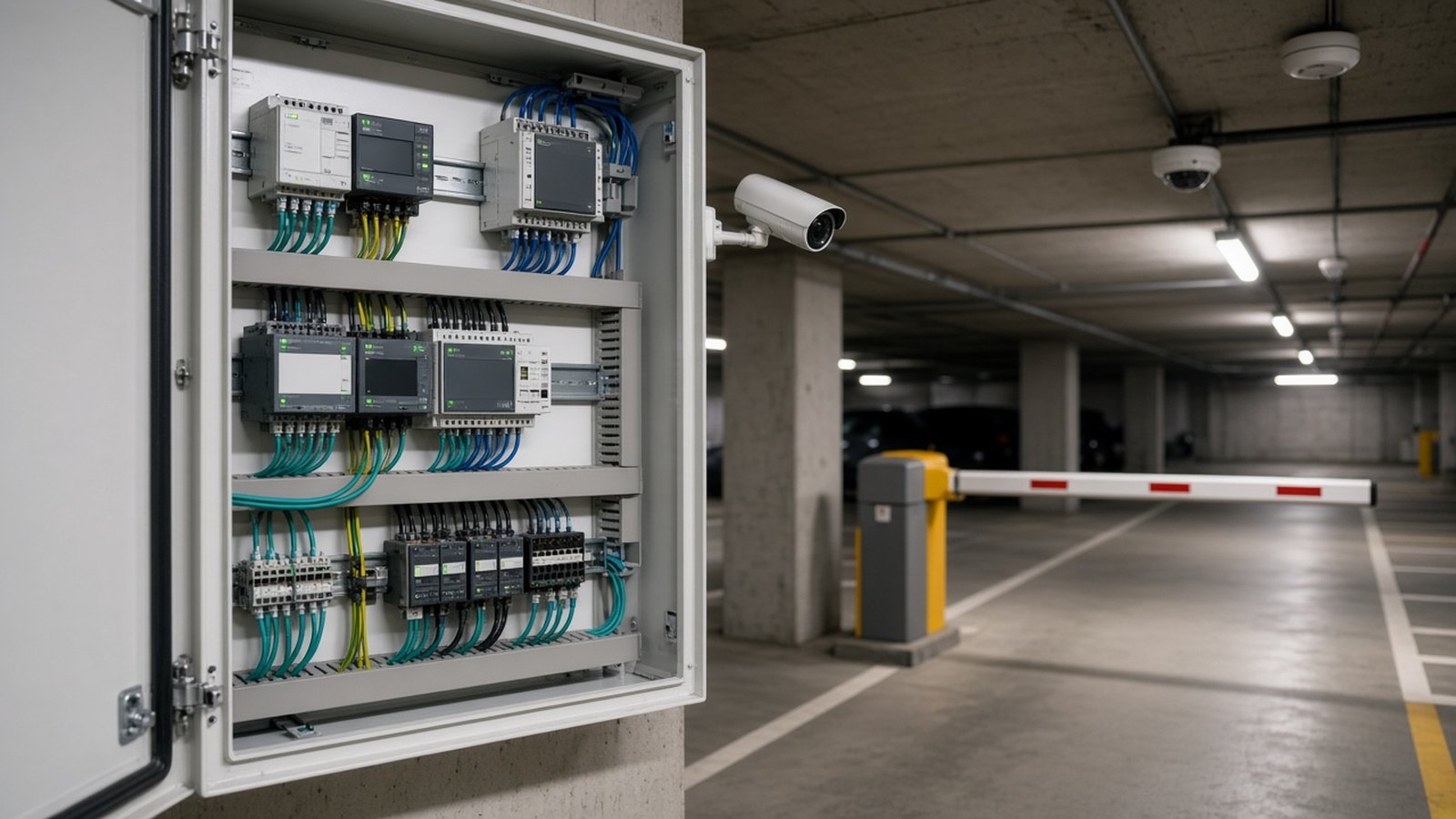
An IoT parking management system is a parking application plus the connected devices that report occupancy, access, and health data. The “IoT” part is the controllers, sensors, cameras, and network paths that move those events into software.
Without a controller and a reliable network, a dashboard is only a picture. With them, a barrier state, a bay sensor, or a reader event can update the same record that cashiers and managers already use.
Typical device classes
- Lane devices: barriers, readers, ANPR cameras, ticket printers.
- Bay devices: occupancy sensors and optional space indicators.
- Site devices: controllers, gateways, and networking.
- Counter devices: POS terminals and payment gateways.
Connectivity can be wired or wireless. What matters is whether the chosen protocol is supported, whether power is available, and whether the operator can see when a device goes offline. A sensor that fails silently is worse than no sensor.
Start with the process, then pick devices
Map the vehicle journey first: approach, identify, authorize, park, pay, exit. Then decide which hardware is required at each step. Facilities that buy sensors before agreeing the operating model often end up with occupancy lights that do not match the software, or barriers that still depend on a guard with a remote.